

-
 Sold outWaihopai Valley LittleBeauty
Little Beauty Sauvignon Blanc Limited Edition 2023
From 19,90€0,75 lUnit price /UnavailableAvailable in 2-3 business daysSold out -
 Sold out23,90€0,75 lUnit price 31,87€ / lUnavailableAvailable in 2-3 business daysSold out
 -
 Club wine
Weingut Weedenborn Sauvignon Blanc 2024
11,90€0,75 lUnit price 15,87€ / lUnavailableAvailable in 2-3 business daysSold out -
 Club wine
Little Beauty Sauvignon Blanc Black Edition 2019
39,90€0,75 lUnit price 53,20€ / lUnavailableAvailable in 2-3 business daysSold out -
 Saint Emilion Grand Cru Classé23,90€0,375 lUnit price 31,87€ / lUnavailableAvailable in 2-3 business daysSold out
 -
 Sold out
Domaine Roc de l'Abbaye Sancerre Blanc 2023
22,90€0,75 lUnit price 30,53€ / lUnavailableAvailable in 2-3 business daysSold out -

Vignobles Berthier Sancerre Les Chasseignes 2017
59,00€1,5 lUnit price 39,33€ / lUnavailableAvailable in 2-3 business daysSold out -

Domaine Roc de l’Abbaye Pouilly-Fumé 2024
18,90€0,75 l21,90€Unit price 25,20€ / lUnavailableAvailable in 2-3 business daysSold out -
 11,90€0,75 lUnit price 15,87€ / lUnavailableAvailable in 2-3 business daysSold out
 -
 Sold out
Vignobles Berthier Sancerre blanc 2023
19,90€0,75 lUnit price 26,53€ / lUnavailableAvailable in 2-3 business daysSold out -
 Sold outPremier Grand Cru Classé99,00€0,75 lUnit price 132,00€ / lUnavailableAvailable in 2-3 business daysSold out
 -
 Saint Emilion Grand Cru ClasséFrom 47,50€0,75 lUnit price 63,33€ / lUnavailableAvailable in 2-3 business daysSold out
 -
 Sold out
Château Smith Haut Lafitte Blanc 2015
129,00€0,75 lUnit price 172,00€ / lUnavailableAvailable in 2-3 business daysSold out -

Lackner-Tinnacher Gamlitz Sauvignon Blanc 2025
17,00€0,75 l18,90€Unit price 22,67€ / lUnavailableAvailable in 2-3 business daysSold out -
 Sold out44,00€0,75 lUnit price 58,67€ / lUnavailableAvailable in 2-3 business daysSold out
 -
 Sold out
Sauvignon Blanc Terra Rossa 2023
21,50€0,75 lUnit price 28,67€ / lUnavailableAvailable in 2-3 business daysSold out -

Château Malartic Lagravière Blanc 2020
From 59,00€0,75 lUnit price 78,67€ / lUnavailableAvailable in 2-3 business daysSold out -

Cantina Terlan Sauvignon Blanc Winkl DOC 2024
24,90€0,75 lUnit price 33,20€ / lUnavailableAvailable in 2-3 business daysSold out -
 From 35,00€0,375 lUnit price 93,33€ / mlUnavailableAvailable in 2-3 business daysSold out
 -
Château Malartic-Lagravière Blanc 2019
From 58,00€Unit price /UnavailableAvailable in 2-3 business daysSold out -
 Sold out
Domaine de Chevalier Blanc 2016
119,00€0,75 lUnit price 158,67€ / lUnavailableAvailable in 2-3 business daysSold out -
Sold outPremier Grand Cru Classé99,00€0,75 lUnit price 132,00€ / lUnavailableAvailable in 2-3 business daysSold out
-
 Sold outPremier Grand Cru Classé99,00€0,75 lUnit price 132,00€ / lUnavailableAvailable in 2-3 business daysSold out
 -

Lackner-Tinnacher Ried Steinbach Sauvignon Blanc 2024
26,00€0,75 l28,90€Unit price 34,67€ / lUnavailableAvailable in 2-3 business daysSold out -
 Club wine
Domaine de Chevalier Blanc 2015
From 115,00€0,75 lUnit price 153,33€ / lUnavailableAvailable in 2-3 business daysSold out -
Club wine
Little Beauty Sauvignon Blanc Black Edition 2023
39,90€0,75 lUnit price 53,20€ / lUnavailableAvailable in 2-3 business daysSold out -

La Clarte de Haut Brion blanc 2017
From 99,00€0,75 lUnit price /UnavailableAvailable in 2-3 business daysSold out -
 Saint Emilion Grand Cru ClasséFrom 42,00€0,75 lUnit price 56,00€ / lUnavailableAvailable in 2-3 business daysSold out
 -

Château Cheval Le Petit Cheval Blanc 2018
490,00€1,5 lUnit price 326,67€ / lUnavailableAvailable in 2-3 business daysSold out -
 14,50€0,75 lUnit price 19,33€ / lUnavailableAvailable in 2-3 business daysSold out
 -

Château La Louvière Blanc 2022
39,90€0,75 lUnit price 53,20€ / lUnavailableAvailable in 2-3 business daysSold out -
 Club wine
Domaine Roc de l'Abbaye Sauvignon Blanc 2024
9,90€0,75 lUnit price 13,20€ / lUnavailableAvailable in 2-3 business daysSold out


About the grape variety
Characteristics and special features of the grape variety
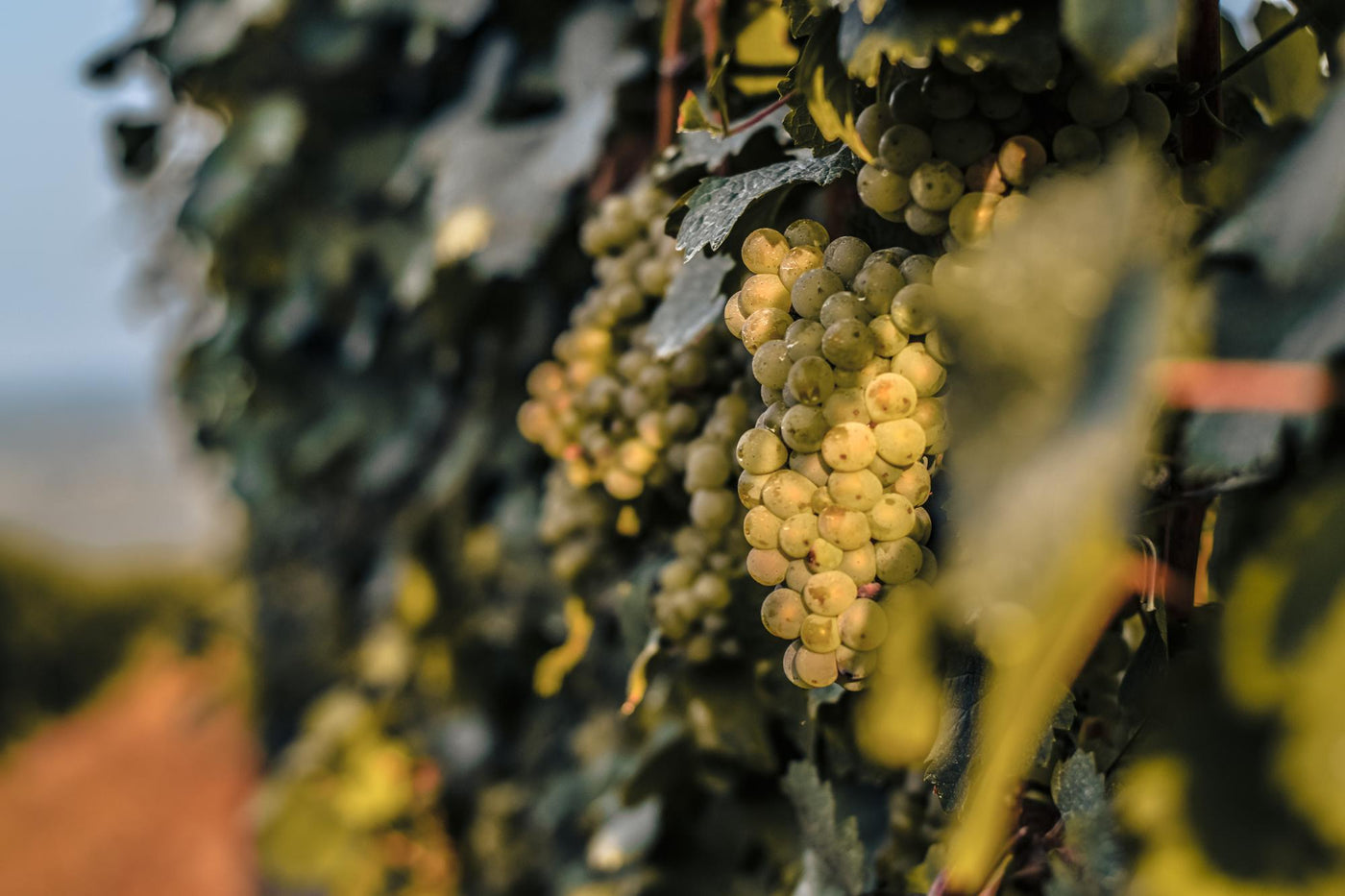
Sauvignon Blanc is one of the most internationally renowned and distinctive white wine grape varieties. The grapes are medium-sized, loosely clustered, and greenish-yellow in color with a rather thick skin, which makes them resistant to diseases and protects the freshness of their aromas. The variety prefers temperate to cool climates but also thrives in warmer regions as long as the nights are cool. Sauvignon Blanc particularly flourishes on calcareous, gravelly, and sandy soils, such as those found in the Loire or Marlborough.
Aromatically, Sauvignon Blanc is unmistakable: typical notes include intense gooseberry, blackcurrant leaf, green bell pepper, lime, grapefruit, and citrus, often complemented by nuances of elderflower, freshly cut grass, hay, or exotic fruits like passion fruit and pineapple. Depending on the origin, mineral, smoky, or chalky nuances may also appear. Particularly characteristic is the pronounced fresh, lively acidity, which gives the wine vibrancy and structure. The body is lean to medium-bodied, always characterized by clarity and elegance.
Terroir significantly influences the style: in cool regions like the Loire, wines of great finesse, minerality, and freshness are produced, while in warmer areas, exotic fruit and richness tend to be more prominent.
Winemaking and aging
Sauvignon Blanc is predominantly produced dry and as a varietal wine. Classic vinification takes place in stainless steel tanks at low temperatures to fully preserve its aromatic freshness. Fermentation on the fine lees adds additional complexity and creaminess. In recent years, winemakers have increasingly experimented with aging in wooden barrels, especially in Bordeaux and in high-quality New Zealand wines. The influence of wood usually remains subtle but enhances the creaminess and gives the wine additional length and structure.
Sweet wines from Sauvignon Blanc are primarily produced in Sauternes and Barsac (Bordeaux), where the grape is processed together with Sémillon and Muscadelle into noble sweet wines. Sauvignon Blanc is also in demand as a blending partner, for example in Bordeaux blends or in Styrian Sauvignon Blanc with Muskateller or Welschriesling.
The aging potential heavily depends on the style: Fresh, fruity Sauvignons should be drunk young, while wood-aged or particularly mineral wines can benefit from several years of bottle aging and gain in complexity.
Major Wine Regions
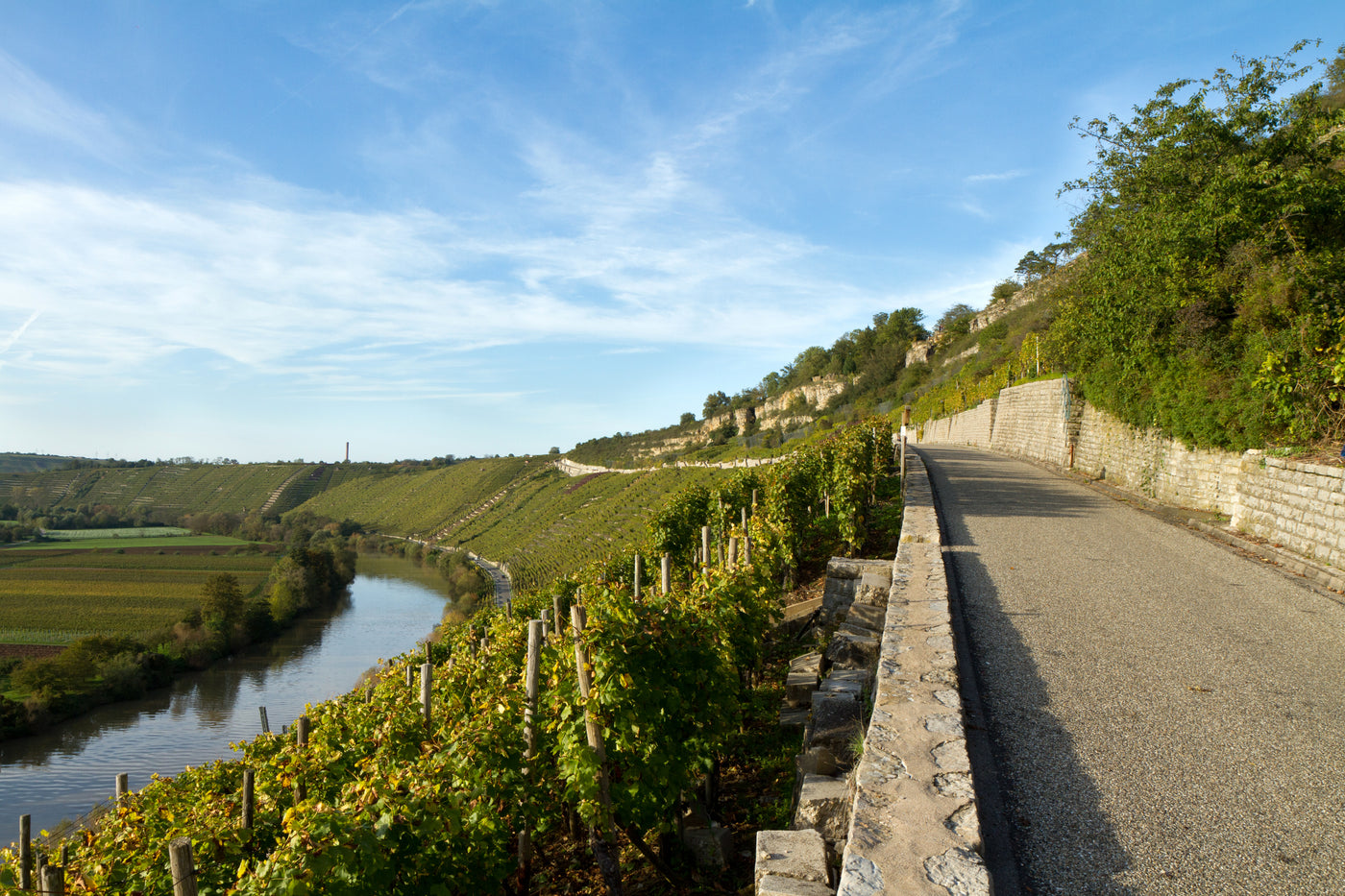
The origins of Sauvignon Blanc lie in France's Loire Valley, particularly in the Sancerre and Pouilly-Fumé appellations. This is where the most famous and elegant examples are produced, characterized by great minerality, finesse, and longevity. In Bordeaux, Sauvignon Blanc plays a central role in dry white wines (Graves, Pessac-Léognan) and as a component of sweet cuvées from Sauternes.
Internationally, Sauvignon Blanc has developed into a true global grape. In New Zealand, especially in Marlborough, particularly aromatic, expressive, and tropical-fruited Sauvignons are produced, which have shaped the international style. Outstanding Sauvignons are also made in South Africa (Stellenbosch, Elgin), California (Napa Valley), Australia, Chile, and Austria (Styria). The terroir determines the style: the spectrum ranges from mineral and austere in the Loire to exotic and opulent in Marlborough.
History of the Grape Variety
Sauvignon Blanc originated in the Loire Valley and Bordeaux, where it was already cultivated in the Middle Ages. The name derives from "sauvage" (wild) and refers to its origins in wild vine populations. The varietal gained its greatest fame in Sancerre and Pouilly-Fumé, from where it began its triumphant march around the world. In the 19th century, Sauvignon Blanc arrived in California, Australia, New Zealand, and South America, where it is now one of the most important noble white grape varieties.
Genetically, Sauvignon Blanc is a parent of Cabernet Sauvignon (a cross with Cabernet Franc). Its adaptability, ability to clearly reflect the terroir, and great aromatic diversity make it one of the most important and popular white wines in the world.
Enjoy a curated selection of wines from various regions


Your Personal Wine Contact - Individual and Local
Whether it's rare vintages, large-format bottles, or custom storage solutions – our team of experts will take the time to understand your needs. In person, by phone, or by email.
