

Popular Wine Regions of Italy


-
 Sold out
Tenute del Il Borgo Toscana IGT 2019
From 89,00€1,5 lUnit price 59,33€ / lUnavailableAvailable in 2-3 business daysSold out -
 Sold out
Tenuta Guado al Tasso Il Bruciato Bolgheri 2021
From 27,90€0,75 lUnit price 37,20€ / lUnavailableAvailable in 2-3 business daysSold out -
 Sold out
Castello di Fonterutoli Ser Lapo Riserva 2019
19,90€0,75 lUnit price 26,53€ / lUnavailableAvailable in 2-3 business daysSold out -
 Sold out
Tenute del La Pietra Chardonnay Toscana IGT 2019
30,00€0,75 lUnit price 40,00€ / lUnavailableAvailable in 2-3 business daysSold out -
 Sold out
Le Macchiole Bolgheri Rosso 2021
24,90€0,75 lUnit price 33,20€ / lUnavailableAvailable in 2-3 business daysSold out -
 Club wine19,90€0,75 lUnit price 26,53€ / lUnavailableAvailable in 2–3 business days business daysSold out
 -
 295,00€0,75 lUnit price 393,33€ / lUnavailableSold out
 -
Tenute del Cabreo Il Borgo 2021
39,00€0,75 lUnit price 52,00€ / lUnavailableAvailable in 2-3 business daysSold out -

Gaja Ca‘ Marcanda Magari, Ca' Marcanda 2018
59,00€0,75 lUnit price 78,67€ / lUnavailableAvailable in 2-3 business daysSold out -
 Sold out
Poggio Antico Brunello di Montalcino 2015
49,90€0,75 l59,00€Unit price 66,53€ / lUnavailableAvailable in 2-3 business daysSold out -

Tenuta San Guido Le Difese 2022
24,90€0,75 l25,00€Unit price 33,20€ / lUnavailableAvailable in 2-3 business daysSold out -

-

6er OHK Sassicaia 2022 + Olivenöl
1.554,00€Unit price /UnavailableAvailable in 2-3 business daysSold out -
 Sold out
Tenuta di Biserno Biserno 2017
379,00€1,5 lUnit price 252,67€ / lUnavailableAvailable in 2-3 business daysSold out -
 154,00€0,75 lUnit price 205,33€ / lUnavailableAvailable in 2-3 business daysSold out
 -
 Sold outFonterutoli Castle
Castello di Fonterutoli Gran Selezione Vicoregio 36 2018
49,00€0,75 lUnit price /UnavailableAvailable in 2-3 business daysSold out -

Monteraponi Chianti Classico DOCG 2024
From 27,90€0,75 lUnit price 37,20€ / lUnavailableAvailable in 2-3 business daysSold out -

Tenute del Cabreo Black Pinot Noir Toscana IGT 2020
26,90€0,75 l33,00€Unit price 35,87€ / lUnavailableAvailable in 2-3 business daysSold out -
 Sold outMontalcino Poggio Antico
Poggio Antico Brunello di Montalcino 2016
63,00€0,75 lUnit price 84,00€ / lUnavailableAvailable in 2-3 business daysSold out -
 Fonterutoli Castle
Castello di Fonterutoli Siepi 2019
From 89,00€0,75 lUnit price 118,67€ / lUnavailableAvailable in 2-3 business daysSold out -

Tenute del Cabreo La Pietra Chardonnay 2022
30,00€0,75 lUnit price 40,00€ / lUnavailableAvailable in 2-3 business daysSold out -
-
 59,00€0,75 lUnit price 78,67€ / lUnavailableAvailable in 2-3 business daysSold out
 -

Poggio Antico Riserva Brunello di Montalcino 2015
119,00€0,75 lUnit price 158,67€ / lUnavailableAvailable in 2-3 business daysSold out -

Tenuta San Guido Olio d’Oliva Extra Virgine | 12698
44,90€0,75 lUnit price /UnavailableAvailable in 2-3 business daysSold out -
 From 149,90€0,75 lUnit price 199,87€ / lUnavailableAvailable in 2-3 business daysSold out
 -
Sold out159,00€0,75 lUnit price 212,00€ / lUnavailableAvailable in 2-3 business daysSold out
-

Grattamacco Bolgheri Rosso DOC 2023
24,90€0,75 lUnit price 33,20€ / lUnavailableAvailable in 2-3 business daysSold out -
 Tenuta di Biserno
Tenuta di Biserno Lodovico 2019
499,00€0,75 lUnit price 665,33€ / lUnavailableAvailable in 2-3 business daysSold out -

Dievole Chianti Classico DOCG 2022
14,90€0,75 l15,90€Unit price 19,87€ / lUnavailableAvailable in 2-3 business daysSold out -

Tenute del Cabreo Il Borgo 2020
From 89,00€1,5 lUnit price 59,33€ / lUnavailableAvailable in 2-3 business daysSold out -
 Club wineFrom 119,00€0,75 lUnit price 158,67€ / lUnavailableAvailable in 2-3 business daysSold out
 -
 Sold out129,00€0,75 lUnit price 172,00€ / lUnavailableAvailable in 2-3 business daysSold out


About the wine region
Wines from Tuscany
Italy is not only one of the oldest wine countries in the world, but also one of the most diverse. From the alpine north to the hot south, from the Mediterranean coasts to the high altitudes of the Apennines – hardly any other country offers such a range of grape varieties, climate zones, and wine styles. With over 20 wine regions, more than 400 indigenous grape varieties, and a deeply rooted culture of enjoyment, Italy is one of the most significant wine producers worldwide. Tuscany is one of Italy's defining wine regions. Between rolling hills, cypress avenues, and medieval towns, Tuscan wines are created that are valued worldwide. The vineyard area comprises several DOCG and DOC zones that stretch across the heart of Italy: Chianti and Chianti Classico, Brunello di Montalcino, Vino Nobile di Montepulciano, Bolgheri with its famous "Super Tuscans," the coastal appellations of Maremma, and the northern areas around Carmignano and Rufina. A Mediterranean climate with warm summers, moderate winters, and clear day-night temperature swings ensures ripe, aromatic grapes. The diversity of soils – from Galestro slate and Alberese limestone to sand and clay to gravelly marine deposits – profoundly shapes the style of the wines. The leading grape is Sangiovese in numerous variations; on the coast, Cabernet Sauvignon, Merlot, and Cabernet Franc shine. Tuscan white wines are often based on Vermentino and Trebbiano, complemented by Chardonnay.
Tuscany has a long winemaking history: monasteries and trading houses shaped quality and distribution for centuries. In the 20th century, the region became an international benchmark through the modernization of cellars, precise vineyard work, and the courage to embrace new styles – for example, with Sassicaia, Tignanello, Ornellaia, and Masseto. Today, top wineries combine tradition and contemporary technology, increasingly focus on sustainable management, and preserve regional identity. Tuscan wine stands for origin, balance, and drinking pleasure.
Grape varieties in Tuscany
Sangiovese is the leading grape variety in Tuscany and is characterized by its robust, red-fruited and structured character. In Bolgheri and Maremma, international varieties such as Cabernet Sauvignon, Merlot, and Cabernet Franc dominate, often in blends. Typical combinations are Sangiovese with Canaiolo or Colorino in Chianti; Cabernet Sauvignon, Merlot, and Cabernet Franc for the so-called "Super Tuscans" from Bolgheri, and for white wines, Vermentino sometimes with Viognier or Chardonnay.

Tuscan Red Wines
Red wines from Tuscany range from lean, chiseled acidity and fine-grained tannins in Sangiovese to powerful yet balanced blends from Bolgheri. In Montalcino (Brunello), the cool high-altitude climate allows for long ripening periods and complex aromas; in Chianti Classico, limestone and slate soils provide finesse and length. On the coast, the warm, maritime terroir with gravel and sandy soils produces dense, blackcurrant-spiced wines with precise structure. Icons such as Sassicaia, Ornellaia, Tignanello, and Masseto have decisively shaped the global reputation of Tuscan wines.
Selected Red Wines from Tuscany
View all-
Tenuta di Biserno
Tenuta di Biserno Lodovico 2019
499,00€0,75 lUnit price 665,33€ / lUnavailableAvailable in 2-3 business daysSold out -
 259,00€0,75 lUnit price 345,33€ / lUnavailableAvailable in 2-3 business daysSold out
 -
Fonterutoli Castle
Castello di Fonterutoli Siepi 2019
From 89,00€0,75 lUnit price 118,67€ / lUnavailableAvailable in 2-3 business daysSold out -
 55,90€0,75 lUnit price /UnavailableAvailable in 2-3 business daysSold out


White wines from Tuscany
Tuscan white wines are often dry, with citrusy freshness, herbal notes, and a saline character – especially Vermentino from coastal areas, which shows Mediterranean lightness. Trebbiano delivers clear, unpretentious everyday wines; Chardonnay and Viognier add richness. Noble sweet varieties are rarer, but Vin Santo – made from dried grapes – represents traditional sweetness with nutty and honey notes, often produced in small quantities.
Selected White Wines from Tuscany
View all-
Sold out
Tenute del La Pietra Chardonnay Toscana IGT 2019
30,00€0,75 lUnit price 40,00€ / lUnavailableAvailable in 2-3 business daysSold out -
Tenute del Cabreo La Pietra Chardonnay 2022
30,00€0,75 lUnit price 40,00€ / lUnavailableAvailable in 2-3 business daysSold out -

Grattamacco Vermentino Bolgheri DOC 2023
42,90€0,75 lUnit price 57,20€ / lUnavailableAvailable in 2-3 business daysSold out -

Monteraponi Toscana Bianco Trebbiano “VD” IGT 2024
79,00€0,75 lUnit price 105,33€ / lUnavailableAvailable in 2-3 business daysSold out


About the Tuscany Wine Region
Tuscany stretches from the Apennines to the Tyrrhenian coast. Important appellations include Chianti and Chianti Classico in the hills between Florence and Siena, Brunello di Montalcino to the south, Vino Nobile di Montepulciano to the east, Bolgheri in the Maremma, as well as Carmignano, Morellino di Scansano, Vernaccia di San Gimignano, and other DOCs. Appellations differ in grape varietal requirements, yields, and aging. Brunello exclusively uses Sangiovese (locally: Sangiovese Grosso), Chianti sometimes permits small proportions of white varieties, and Bolgheri defines blends with international grapes. Historically, Tuscany was connected early on via sea and trade routes; the Renaissance cities promoted quality, labeling, and export. Today, Tuscany is one of Italy's leading quality regions with a strong identity.
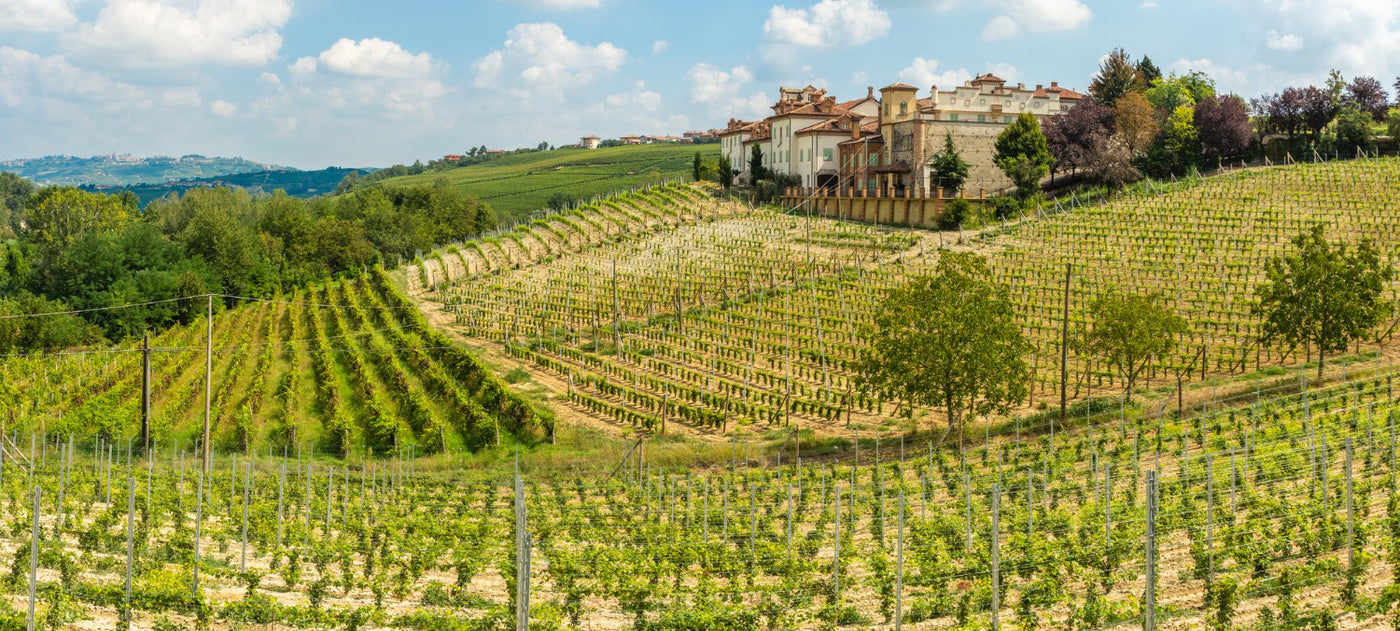
Terroir: Climate and Soils of Tuscany
A Mediterranean climate prevails, with warmth and sea breezes along the coast, and cooler nights in the hills. A longer growing season ensures stable ripening. The soils consist of Galestro (crumbly schist) and Alberese (calcareous marl) in Chianti Classico, while loam and limestone predominate in Montalcino. In Bolgheri, gravel, sand, and fossil deposits are found, and in parts of the Maremma, even volcanic and clayey inclusions. Stylistically, Sangiovese from limestone/schist soils is characterized by its bright fruit aromas, and precise, tannin-driven body. The coastal Bordeaux blends of Cabernet/Merlot show dark fruit, notes of graphite and herbs. The white wines of Tuscany from Vermentino bring salt, citrus, and a bitter finish. Vin Santo is produced by drying and long aging in small barrels, resulting in nutty, honey-like aromas and a lively body.
Wineries in Tuscany
In Tuscany, wineries – from historic family estates to modern cellars – stand for origin and quality. Many wines are marketed under the winery's name, for which brand identity plays a central role. Icons like Sassicaia (Tenuta San Guido), Ornellaia, Tignanello (Marchesi Antinori), and Masseto shape the region's reputation. Legendary estates are known for a distinctive style, precise vineyard work, and consistent selection.
For context: In Bordeaux, one speaks of "Châteaux" and a historical classification system. For a deeper comparison with famous names like Château Margaux or Château Mouton Rothschild, it's worth looking at their importance for prestige and origin in the Bordelais.
In Tuscany, quality assurance is primarily achieved through appellation rules (DOCG/DOC), winemaker selection, and the reputation of individual wineries. The architecture ranges from ancient villas to minimalist cellars, always with a focus on function and aesthetics.
Discover Tuscan wine now
Brunello di Montalcino: 100% Sangiovese, long aging potential, cherry, wild berries, leather, fine acidity.
Chianti Classico: Sangiovese-based, red fruit, herbs, lively structure, versatile at the table.
Bolgheri Rosso/Super Tuscans: Cabernet/Merlot/Cabernet Franc, dark fruit, spices, polished tannins.
Vernaccia di San Gimignano: dry, almond-citrus, mineral length.
Vin Santo: noble sweet, dried fruit, honey, nut, ideal with Cantuccini.
Enjoy a curated selection of wines from various regions


Your Personal Wine Contact - Individual and Local
Whether rare vintages, large-format bottles, or individual storage solutions – our team of experts will take the time to discuss your needs. In person, by phone, or by email.
