

Popular German Wine Regions


-

Korrell Sekt Brut Nature Sekt 120 Monate gereift
60,00€1,5 lUnit price 40,00€ / lUnavailableAvailable in 2-3 business daysSold out -
 35,00€0,75 lUnit price 46,67€ / lUnavailableAvailable in 2-3 business daysSold out
 -
 Sold out
Korrell Slice of Pleasure Rosé 2024
From 18,90€0,75 lUnit price 25,20€ / lUnavailableAvailable in 2-3 business daysSold out -

Dr. Thanisch Bernkasteler Lay Riesling GG Coral Wine Edition 2021
29,90€0,75 lUnit price 39,87€ / lUnavailableAvailable in 2-3 business daysSold out -
 Sold out30,00€0,75 lUnit price 40,00€ / lUnavailableAvailable in 2-3 business daysSold out
 -

Korrell Kreuznacher Paradies black label 2020
35,00€0,75 lUnit price 46,67€ / lUnavailableAvailable in 2-3 business daysSold out -

Korrell Slice of Pleasure Rosé 2025
From 18,90€0,75 lUnit price 25,20€ / lUnavailableAvailable in 2-3 business daysSold out -
 29,00€0,75 lUnit price 38,67€ / lUnavailableAvailable in 2-3 business daysSold out
 -
 Sold out
Kolonne Null Rosé Prickelnd 2020
14,80€0,75 lUnit price 19,73€ / lUnavailableAvailable in 2-3 business daysSold out -
 Sold out
Kolonne Null Cuvée Blanc No.01 Prickelnd
13,90€0,75 lUnit price 18,53€ / lUnavailableAvailable in 2-3 business daysSold out -
 19,90€0,75 lUnit price 26,53€ / lUnavailableAvailable in 2-3 business daysSold out
 -
 Sold out23,90€0,75 l
26,90€Unit price /UnavailableAvailable in 2-3 business daysSold out -
 Club wine
Weingut Weedenborn Sauvignon Blanc 2024
11,90€0,75 lUnit price 15,87€ / lUnavailableAvailable in 2-3 business daysSold out -
 Sold out
Korrell Kreuznach Riesling 2021
15,00€0,75 lUnit price 20,00€ / lUnavailableAvailable in 2-3 business daysSold out -
 Sold out22,95€0,5 lUnit price 45,90€ / lUnavailableAvailable in 2-3 business daysSold out
 -
 Sold out
Korrell Weißburgunder 500 2021
30,00€0,75 lUnit price 40,00€ / lUnavailableAvailable in 2-3 business daysSold out -
 Sold out
Korrell Muskateller & Riesling fruchtig 2024
11,50€0,75 lUnit price /UnavailableAvailable in 2-3 business daysSold out -

Villa Huesgen Weißburgunder 2022
10,00€0,75 lUnit price 13,33€ / kgUnavailableAvailable in 2-3 business daysSold out -
 11,50€0,75 lUnit price 15,33€ / lUnavailableAvailable in 2-3 business daysSold out
 -

Raumland Cuvée Marie-Luise 2019
25,00€0,75 lUnit price /UnavailableAvailable in 2-3 business daysSold out -
 12,50€0,75 lUnit price 16,67€ / lUnavailableAvailable in 2-3 business daysSold out
 -

Korrell Étape Riesling 2021 - Kiste mit 3 Flaschen
237,00€0,75 lUnit price 79,00€ / itemUnavailableAvailable in 2-3 business daysSold out -


Kreuznacher Paradies Riesling trocken 2022
From 32,00€0,75 lUnit price 42,67€ / lUnavailableAvailable in 2-3 business daysSold out -
 9,90€0,75 lUnit price 13,20€ / lUnavailableAvailable in 2-3 business daysSold out
 -

Villa Huesgen Blauschiefer Riesling trocken 2022
10,00€0,75 lUnit price 13,33€ / lUnavailableAvailable in 2-3 business daysSold out -
 82,90€0,75 lUnit price /UnavailableAvailable in 2-3 business daysSold out
 -
 Sold out
Peter Jakob Kühn Oestrich Lenchen Riesling GG 2018
VDP. Grosses Gewächs.44,00€0,75 lUnit price 58,67€ / lUnavailableAvailable in 2-3 business daysSold out -

Peter Jakob Kühn Doosberg GG 2021
VDP. Grosses Gewächs.59,00€0,75 lUnit price 78,67€ / lUnavailableAvailable in 2-3 business daysSold out -

Frank John Pinot Noir Kalksandstein 2017
40,00€0,75 lUnit price 53,33€ / lUnavailableAvailable in 2-3 business daysSold out -

10+2 Summer Special: Slice of Pleasure Rosé 2025
189,00€Unit price /UnavailableAvailable in 2-3 business daysSold out -
 11,90€0,75 lUnit price 15,87€ / lUnavailableAvailable in 2-3 business daysSold out


About the wine country
About German Wine
Germany is back! What seems so self-evident today was completely different at the turn of the millennium. German wine has made an enormous leap forward in the last 20 years. Not only have the qualities continuously improved, but the world has also rediscovered the virtues of German wines.
Because 100 years ago, German wines were already among the best and noblest one could drink – from the Titanic to the royals of this world, everyone drank German wine. Two world wars severely diminished the bestseller of the 1920s, and after decades of almost forgotten fine growths, winemakers have fought their way back to the top of the wine world.
Today, German wine is primarily known for Riesling. Long growing seasons and white wines characterize this cool wine country. Along river valleys such as the Mosel, Rhine, Nahe, and Saale, wines with moderate alcohol, clear acidity, and unmistakable aromatics are produced.
Germany is one of Europe's most exciting cool-climate regions: the combination of steep slopes, diverse soils, and precise cellar work results in a style that is internationally appreciated. The focus is on long-lasting German white wine – increasingly, but also on characterful German red wine.
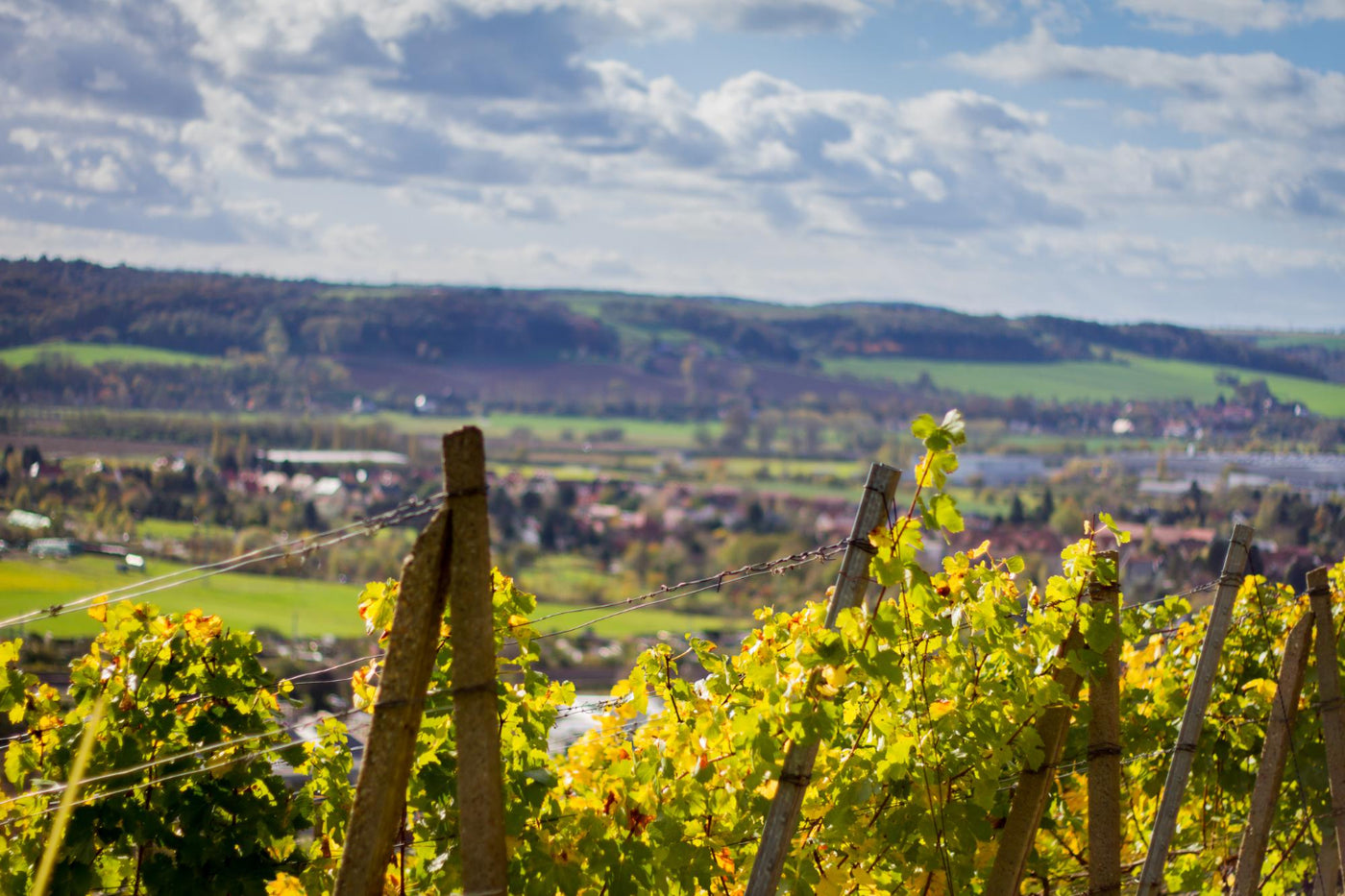
Regions at a glance: From Mosel to Pfalz
Mosel is a significant German wine-growing region. On blue and red slate, delicate, mineral wines thrive here, with Riesling particularly prominent for its crystal-clear fruit, delicate sweet-sour balance, and great aging potential. Steep slopes like the famous Mosel terraces characterize the spectacular landscape and style. Kabinett and Auslese play a major role here.
The Pfalz (Pfalz) is one of the warmest wine-growing regions in Germany. Sun-drenched sites yield juicy and structured wines. In addition to Riesling, Pinot Gris, Chardonnay, and increasingly German red wine (Pinot Noir) impress with depth and richness. The Pfalz combines tradition with modern winemaking. Wineries like Bürklin Wolf have achieved worldwide renown here.
The Rheingau is the classic Riesling stronghold along the Rhine – taut, spicy, often dry, and terroir-driven. Renowned wineries such as Georg Breuer, Robert Weil, and Schloss Johannisberg are located here.
Rheinhessen is a pioneer of the German wine revolution. From chalk-influenced, crisp white wines to modern, fruit-driven aromatic Rieslings. Wineries like Klaus Peter Keller and Raumland are among the absolute best in Germany.
The Nahe is the finest and most elegant German wine region with kaleidoscopic soils. The concentration of top wineries is extraordinarily high. Wineries such as Schlossgut Diel and Korrell, as well as Schäfer Fröhlich and Korrell, are at the absolute pinnacle here.
The Ahr is Germany's red wine stronghold; Pinot Noir is the leading grape variety here and presents itself as powerful, dark-berried, and spicy in the glass. The Ahr is one of the smallest wine-growing regions and is characterized by extremely steep slopes. Wineries such as Mayer Näkel and Burggarten are worth mentioning here.
The Baden and Württemberg wine regions boast the most sunshine hours per year and are particularly known for Burgundian grape varieties such as Chardonnay, Pinot Blanc, Pinot Gris, and Pinot Noir. Wineries such as Franz Keller and Dr. Heger are among the best here.
In the only Bavarian wine-growing region of Franken (Franken) around Würzburg, the leading grape variety is Silvaner, alongside which Pinot Noir and Chardonnay are also cultivated. The Fürst winery is one of the best in the region, if not Germany.
Regarding the regions of Germany


Climate and Grape Varieties: Where Coolness Meets Character
Climate
Germany is a classic cool-climate wine country. Long ripening periods allow for the development of delicate aromas at moderate alcohol levels. Rivers balance temperatures, hillside locations ensure sun exposure, while cool nights preserve acidity. German white wine, with its precision and freshness, stands for longevity.
Grape Varieties
The leading grape variety, Riesling, is crystal clear, exciting, and terroir-driven. From dry and stony to nobly sweet and creamy. Riesling is the flagship for wine from Germany.
Pinot Gris is popular for uncomplicated wine enjoyment but can also be great, as wines from Dr. Heger and Franz Keller demonstrate. In a cool climate, Chardonnay is elegant and powerful at the same time; it is mineral with fine spice. Maturation in wood brings depth and characterful wines. German red wine, especially Pinot Noir, is fine, structured, with cool fruit, herbal spice, and precise tannins. Furthermore, Lemberger is known for strong and firm red wines.

German Red Wines
German red wine impresses with its elegance and variety, from fruity Pinot Noirs to full-bodied Dornfelders.

German white wines
German white wine, with its precision and freshness, stands for longevity.
Terroir and Style: Origin in the Glass
Slate on the Mosel, loess and limestone in the Pfalz, red sandstone in Rheinhessen, shell limestone and Keuper in Franken – these soils shape texture, aroma, and length. Riesling, in particular, demonstrates terroir expression like hardly any other grape variety. German wine stands for clarity: fresh acidity, precise fruit, elegant structure.
Buy wines from Germany
Collectors Wine World curates a small, fine selection of top German wineries for you. All our German partner wineries work to the highest standards and are committed to sustainability. From everyday wines like a simple estate Riesling to "Große Gewächse" (Grand Cru), we offer everything that wine collectors and connoisseurs desire.
Enjoy a curated selection of wines from different regions


Your personal wine contact – individual and regional
Whether rare vintages, large-format bottles, or individual storage solutions – our expert team takes the time to understand your wishes. Personally, by phone, or by email.
