

-

Korrell Sekt Brut Nature Sekt 120 Monate gereift
60,00€1,5 lUnit price 40,00€ / lUnavailableAvailable in 2-3 business daysSold out -
 35,00€0,75 lUnit price 46,67€ / lUnavailableAvailable in 2-3 business daysSold out
 -

Korrell Kreuznacher Paradies black label 2020
35,00€0,75 lUnit price 46,67€ / lUnavailableAvailable in 2-3 business daysSold out -
 Sold out30,00€0,75 lUnit price 40,00€ / lUnavailableAvailable in 2-3 business daysSold out
 -

Korrell Slice of Pleasure Rosé 2025
From 18,90€0,75 lUnit price 25,20€ / lUnavailableAvailable in 2-3 business daysSold out -
 19,90€0,75 lUnit price 26,53€ / lUnavailableAvailable in 2-3 business daysSold out
 -
 Sold out23,90€0,75 l
26,90€Unit price /UnavailableAvailable in 2-3 business daysSold out -
 Sold out
Korrell Kreuznach Riesling 2021
15,00€0,75 lUnit price 20,00€ / lUnavailableAvailable in 2-3 business daysSold out -
 Sold out
Korrell Weißburgunder 500 2021
30,00€0,75 lUnit price 40,00€ / lUnavailableAvailable in 2-3 business daysSold out -
 Sold out
Korrell Muskateller & Riesling fruchtig 2024
11,50€0,75 lUnit price /UnavailableAvailable in 2-3 business daysSold out -
 11,50€0,75 lUnit price 15,33€ / lUnavailableAvailable in 2-3 business daysSold out
 -


Kreuznacher Paradies Riesling trocken 2022
From 32,00€0,75 lUnit price 42,67€ / lUnavailableAvailable in 2-3 business daysSold out -

Korrell Étape Riesling 2021 - Kiste mit 3 Flaschen
237,00€0,75 lUnit price 79,00€ / itemUnavailableAvailable in 2-3 business daysSold out -
 12,50€0,75 lUnit price 16,67€ / lUnavailableAvailable in 2-3 business daysSold out
 -
 9,90€0,75 lUnit price 13,20€ / lUnavailableAvailable in 2-3 business daysSold out
 -

10+2 Summer Special: Slice of Pleasure Rosé 2025
189,00€Unit price /UnavailableAvailable in 2-3 business daysSold out -
 11,90€0,75 lUnit price 15,87€ / lUnavailableAvailable in 2-3 business daysSold out
 -
 Sold out
Korrell Von den ersten Lagen 2021
19,50€0,75 lUnit price 26,00€ / lUnavailableAvailable in 2-3 business daysSold out -

Korrell Norheimer Kirschheck 2020
36,00€0,75 lUnit price 48,00€ / lUnavailableAvailable in 2-3 business daysSold out -

-
 Sold out11,50€0,75 lUnit price 15,33€ / lUnavailableAvailable in 2-3 business daysSold out
 -
 46,00€0,75 lUnit price 61,33€ / lUnavailableAvailable in 2-3 business daysSold out
 -

-


Norheimer Kirschheck Riesling trocken 2022
From 32,00€0,75 lUnit price 42,67€ / lUnavailableAvailable in 2-3 business daysSold out -
 9,90€0,75 lUnit price /UnavailableAvailable in 2-3 business daysSold out
 -

Korrell Kreuznacher Paradies 2021
34,00€0,75 lUnit price /UnavailableAvailable in 2-3 business daysSold out -
30,00€0,75 lUnit price 40,00€ / lUnavailableAvailable in 2-3 business daysSold out
-
 Sold out
Korrell Pinot Blanc Estate Wine 2024
11,50€0,75 lUnit price 15,33€ / lUnavailableAvailable in 2-3 business daysSold out -
 12,50€0,75 lUnit price 16,67€ / lUnavailableAvailable in 2-3 business daysSold out
 -

Korrell von der Großen Lagen Riesling Trocken 2023
19,90€0,75 lUnit price 26,53€ / lUnavailableAvailable in 2-3 business daysSold out -

Korrell Weinbrand "20 Jahre Holzfass" 20
99,00€0,7 lUnit price 132,00€ / lUnavailableAvailable in 2-3 business daysSold out


About the wine region
Wines from the Nahe
The Nahe is one of Germany's diverse wine regions with a special character. Wine from the Nahe stands for a rare combination of cool clarity, great soil diversity, and finely balanced fruit. Along the River Nahe and its side valleys, wines of character are produced, their style shaped by site, exposure, and geological matrix. Riesling and Pinot Blanc, in particular, demonstrate why Nahe wine is in international demand: precise acidity, mineral length, and great drinkability. At the same time, the region impresses with a consistent price-performance ratio and a dynamic winemaking scene that makes the origin transparent.
Grape varieties from the Nahe – typical for the Nahe and fine cuvées
On the Nahe, Riesling and Silvaner dominate, complemented by Pinot Gris, Pinot Blanc, Müller-Thurgau, Scheurebe, and Pinot Noir for red wine. Although varietal wines are very common, elegant white wine cuvées can be found, for example, from Riesling with Pinot Blanc or Pinot Gris, which balance freshness, intensity, and creaminess.

Red wines from the Nahe
Red wines from the Nahe, especially Pinot Noir, display cool red fruit, delicate herbs, and a limestone or slate-influenced minerality. The region benefits from diverse soils: slate brings tension and herbaceous spice, loess and clay provide a little more richness, and limestone ensures cool precision. The moderate climate preserves freshness, keeping Nahe red wines elegant and making them an excellent match for modern cuisine.
Selected Red Wines from Nahe
View all-
12,50€0,75 lUnit price 16,67€ / lUnavailableAvailable in 2-3 business daysSold out
-
 11,50€0,75 lUnit price 15,33€ / lUnavailableAvailable in 2-3 business daysSold out
 -
 Sold out
Korrell Spätburgunder Paradies 2016
38,00€0,75 lUnit price 50,67€ / lUnavailableAvailable in 2-3 business daysSold out


Nahe White Wines
Dry Rieslings from the Nahe region are crystal clear, precise, and exhibit citrus, stone fruit, and a distinctive salty length. Pinot Blanc offers supple textures and delicate yellow fruit; blends of Riesling and Pinot varieties play with a balance between tension and creaminess. In particularly well-suited vineyards, fine-fruited Kabinett wines as well as noble sweet Auslese and Beerenauslese wines with great aging potential are also produced.
Selected White Wines from the Nahe
View all-
35,00€0,75 lUnit price 46,67€ / lUnavailableAvailable in 2-3 business daysSold out
-
Korrell Kreuznacher Paradies black label 2020
35,00€0,75 lUnit price 46,67€ / lUnavailableAvailable in 2-3 business daysSold out -
 Sold out19,90€0,75 lUnit price 26,53€ / lUnavailableAvailable in 2-3 business daysSold out
 -
Korrell Norheimer Kirschheck 2020
36,00€0,75 lUnit price 48,00€ / lUnavailableAvailable in 2-3 business daysSold out

About the Nahe wine region
The Nahe region is located southwest of Rheinhessen and east of the Mosel. Along the Nahe river and its side valleys, numerous small, distinctive sites are strung together. The region is known for its enormous geological diversity: soils and exposures change over short distances, allowing for an unusually wide range of styles. Various village and site designations clarify origin and quality standards; many wineries work with clear hierarchical levels of origin, such as Gutswein (estate wine), Ortswein (village wine), Erste Lage (premier cru), and Große Lage (grand cru).
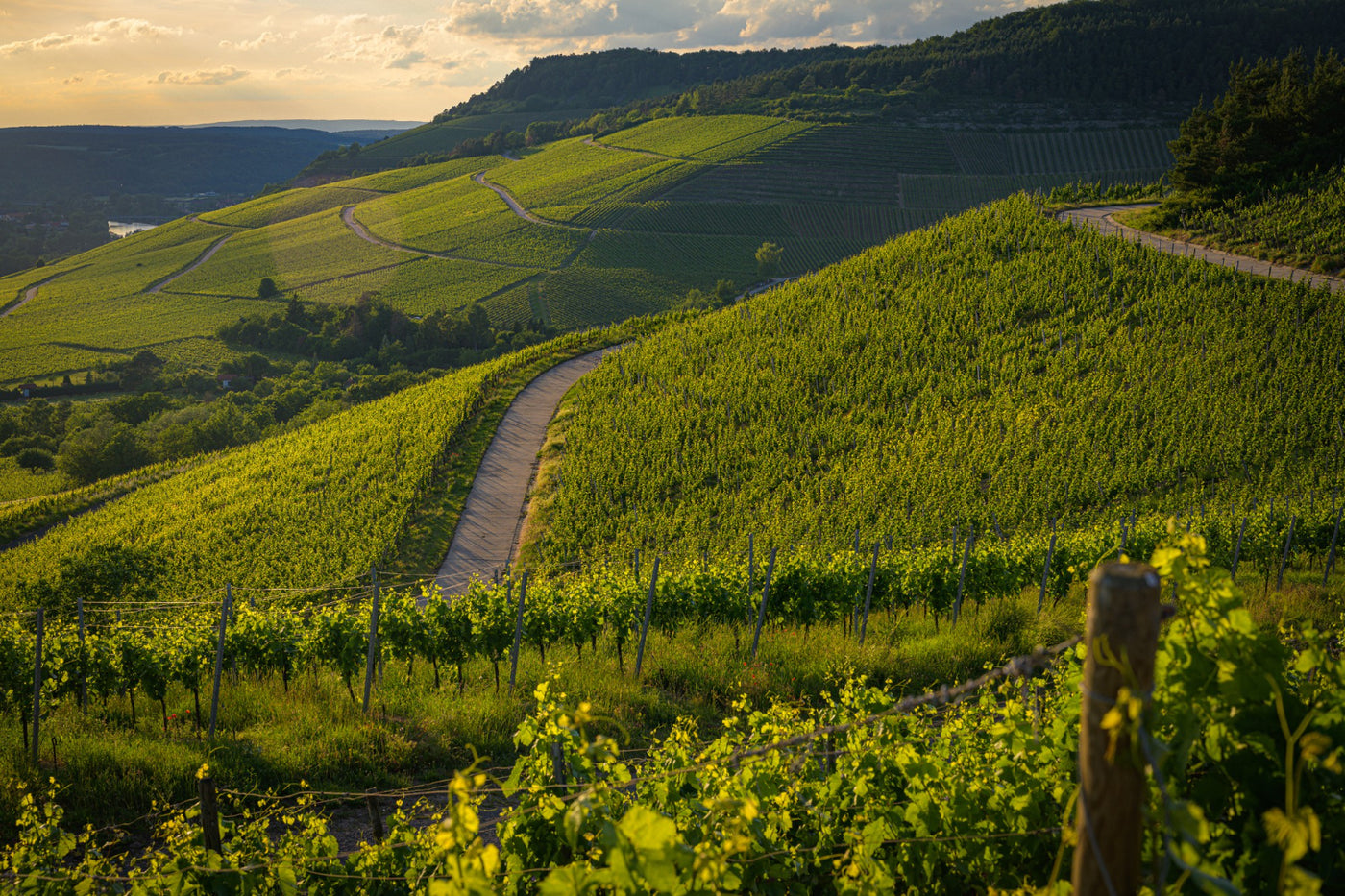
Nahe Terroir
The cool to moderate climate of the Nahe wine region, with sufficient sunshine and proximity to the river, ensures mild temperature fluctuations, promotes optimal grape ripening, and simultaneously preserves the wines' characteristic acidic structure. The Nahe wine region offers exceptional geological diversity: a mosaic of slate, volcanic rock such as porphyry, quartzite, sandstone, loess, clay, and limestone inclusions shapes the characteristics of the wines produced there. Slate and quartzite promote a taut acidity, cool herbal notes, and a salty finish – ideal conditions for precise Rieslings. Sandstone and loess yield yellow fruit aromas and more volume, which pairs particularly well with Pinot Blanc and delicate cuvées. Limestone inclusions provide a straightforward structure and chalky minerality, making Pinot Noir from the Nahe particularly exciting.
This terroir explains why wine from the Nahe tastes so diverse: site differences shape the texture, acidity management, and aromatics. Winemakers leverage this diversity to create clearly defined styles – from purist Riesling to creamier Burgundy interpretations.
Nahe Wineries
The wineries on the Nahe stand for origin, signature, and a promise of quality. Important Nahe wineries, such as Weingut Dönnhoff or Gut Hermannsberg, showcase the range from purist Rieslings to modern cuvées. A positive example is Weingut Korrell in Bad Kreuznach: Korrell wines represent a precise, terroir-driven style with a strong focus on Riesling and Burgundy varieties. Those who search for "Korrell" and "Weingut Nahe" will find a range from dry village and single-vineyard wines to characterful premium wines.
The Nahe – similar to other classic regions – possesses an understanding of origin and quality that is often conveyed through village and vineyard designations. This highlights outstanding vineyards and offers guidance to buyers.
Enjoy a curated selection of wines from various regions


Your Personal Wine Contact - Individual and Local
Whether rare vintages, large-format bottles, or individual storage solutions – our team of experts will take the time to discuss your needs. In person, by phone, or by email.
