

About the grape variety
Characteristics and special features of the grape variety
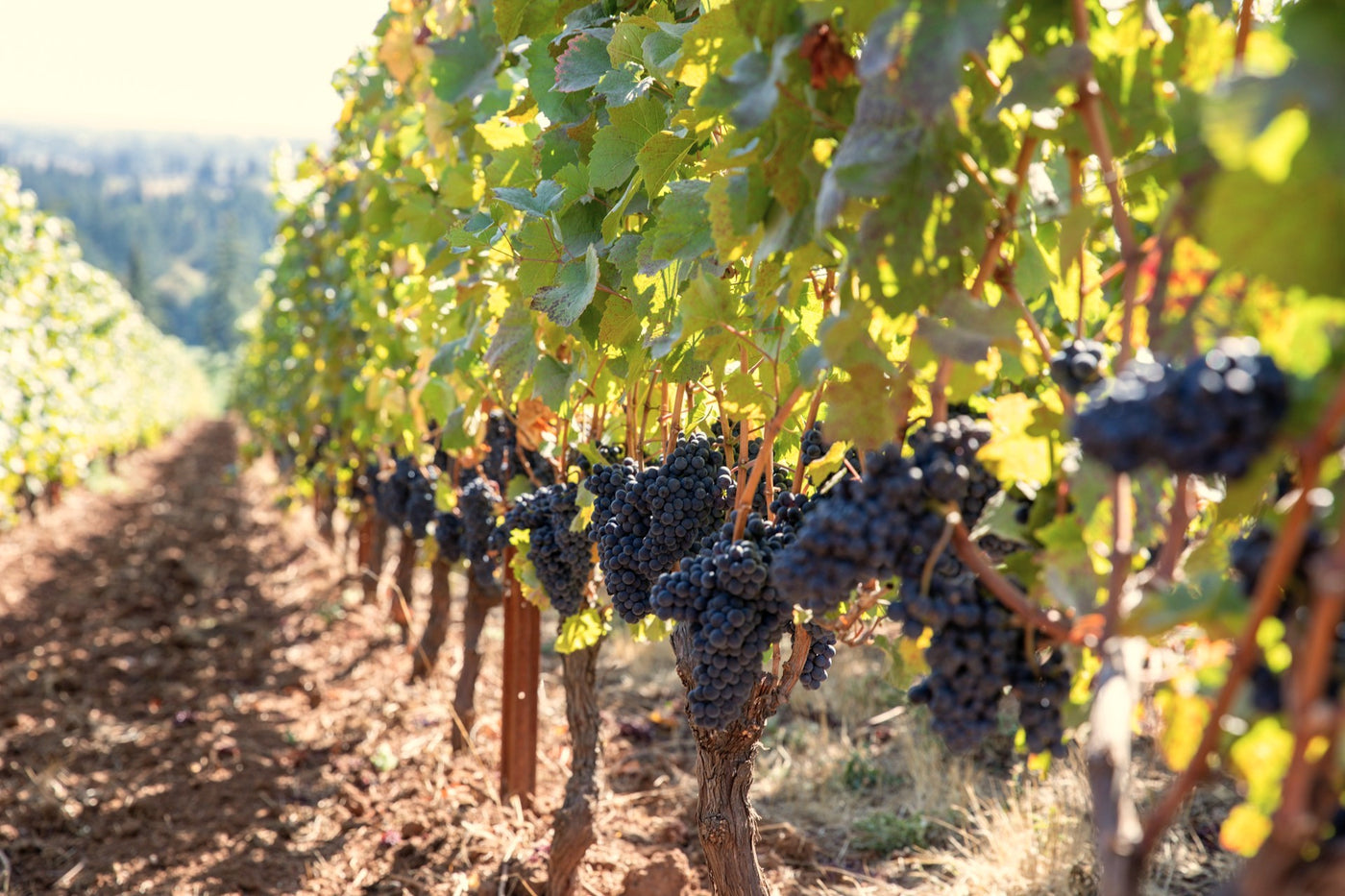
Pinot Noir, also known as Spätburgunder in German-speaking regions, is one of the noblest and most sophisticated red wine grape varieties in the world. The grapes are small to medium-sized, and the berries have a thin, bluish-purple skin. This delicate skin makes Pinot Noir particularly susceptible to weather influences and fungal diseases, but it also leads to the delicate, transparent colors and complex, multi-layered aromas that make this variety so unique.
Pinot Noir prefers moderate to cool climates. Ideal conditions are offered by regions with long growing seasons, sufficient sun, and significant diurnal temperature variations. The variety thrives particularly well on calcareous, loamy, or marl soils, which lend the wines finesse and a characteristic minerality. The choice of location and the terroir are crucial for Pinot Noir: wines can differ significantly in style and expression even over a few meters.
Aromatically, Pinot Noir spans a wide range: characteristic aromas include red berry fruits such as cherry, raspberry, strawberry, or cranberry, accompanied by violet, rose, and often a hint of forest floor, mushrooms, or fine spices. With increasing maturity, notes of leather, tobacco, undergrowth, and truffle develop. The acidity is rather low, giving the wine freshness and elegance. The tannins are fine and silky, never dominant, and give the wine structure without making it seem heavy. The body is rather lean to medium-bodied, always characterized by finesse and balance.
Pinot Noir, like hardly any other variety, is capable of capturing and reflecting the terroir of its origin. This is precisely why Pinot Noir is particularly valued by winemakers and wine lovers and is considered "the white among red grape varieties."
Winemaking and aging
Pinot Noir is almost exclusively produced as a dry wine. Vinification requires great care, as the thin-skinned berries are sensitive to excessive extraction and oak influence. Traditionally, mash fermentation takes place in open wooden vats or stainless steel tanks to gently extract color, aroma, and tannin. High-quality wines then mature in large wooden barrels or barriques, with oak usage always remaining restrained so as not to overpower the delicate fruit and typical elegance.
In addition to classic red wines, Pinot Noir is also the most important grape variety for high-quality rosé wines and sparkling wines – for example, in Alsace, Champagne, and for German Winzersekt. Most Pinot Noirs are very approachable when young but gain significant complexity, depth, and finesse with bottle aging. Top wines from first-class sites can easily be stored for ten years or more.
Major Wine Regions
The cradle of Pinot Noir lies in French Burgundy, where the grape is made into world-famous Grand Crus in legendary sites such as Côte de Nuits, Gevrey-Chambertin, or Vosne-Romanée. In Champagne, Pinot Noir is a significant foundation for great Champagnes. Excellent representatives can also be found in Alsace, on the Loire, and in Austria.
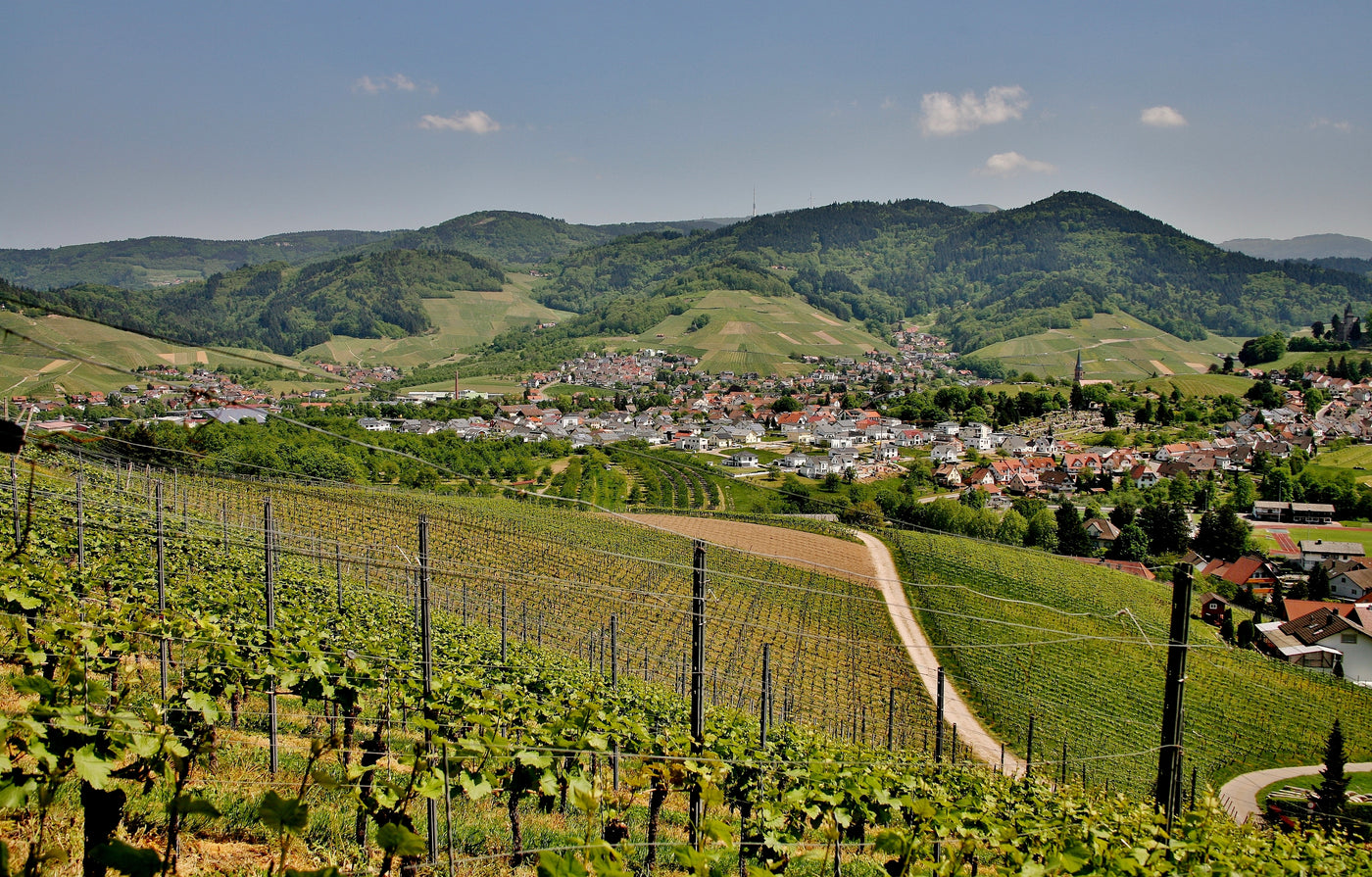
In Germany, where Pinot Noir is known as Spätburgunder, it is one of the most important red wine varieties. The best wines come from Baden, the Pfalz, the Ahr Valley, Rheingau, and Franken. In Switzerland, Northern Italy (as Pinot Nero), California (Sonoma Coast, Russian River Valley, Santa Barbara), Oregon, New Zealand (Central Otago, Marlborough), and Australia (Yarra Valley, Mornington Peninsula), great, distinctive Pinot Noirs are also produced. The respective terroir significantly shapes the style: from delicate and elegant to fruity and spicy, to concentrated and complex.
History of the Grape Variety
Pinot Noir is one of the oldest grape varieties in the world and is thought to originate from Burgundy, France, where it was cultivated over 2,000 years ago. The variety was originally spread by the Romans, and later perfected by medieval monasteries. Pinot Noir is the parent grape of many well-known Burgundy varieties such as Chardonnay, Pinot Gris, and Pinot Meunier, and is considered to be particularly genetically diverse.
In the 19th and 20th centuries, Pinot Noir spread throughout Europe and later to the New World. Today, the variety is experiencing a renaissance: winemakers worldwide are experimenting with new cultivation and winemaking techniques to fully exploit the subtleties and terroir potential of this demanding grape. In modern wine culture, Pinot Noir stands more than ever for elegance, authenticity, and finesse.
Enjoy a curated selection of wines from various regions


Your Personal Wine Contact - Individual and Local
Whether rare vintages, large-format bottles, or individual storage solutions – our team of experts will take the time to discuss your needs. In person, by phone, or by email.
