

About the winery
Château d’Yquem - From the beginnings to the Lur-Saluces family
The roots of Château d’Yquem date back to the late 16th century. In 1593, Jacques de Sauvage took over the estate as a fiefdom, and in 1711, the property finally became family-owned.
With the marriage of Françoise-Joséphine de Sauvage d’Yquem and Louis-Amédée de Lur-Saluces in 1785, the long era of the Lur-Saluces family began, which would shape d’Yquem's profile for more than two centuries.
After her husband's early death, Françoise-Joséphine took over responsibility for the winery and developed d’Yquem into one of the best wines of Sauternes. In the 19th century, Château d’Yquem rose to become the absolute icon of sweet wines. In 1855, in the famous Bordeaux classification year, d’Yquem was the only winery in Sauternes to be elevated to Premier Cru Supérieur – a special category above all other Premier Crus.
This period is considered the "golden age" of the winery: nobles, presidents, and merchants throughout Europe and the USA valued d’Yquem as a benchmark for sweet wine. Vintages like 1811 or later 1921 and 1937 significantly contribute to the myth, and individual bottles still fetch record prices at auctions today.
Despite wars, economic crises, and declining demand for sweet wine, d’Yquem remains constant. The uncompromising selection for quality, even to the point of foregoing production in bad years, continues to shape the global perception of the wine to this day.

d’Yquem Today – LVMH as New Owner
The 1990s marked a new chapter: luxury goods group LVMH (Louis Vuitton - Moët Hennessy) gradually acquired a majority stake in Château d'Yquem; since the late 1990s, the estate has been majority-owned by the group.
Since 2004, Pierre Lurton – also General Manager of Château Cheval Blanc – has been responsible for the operational management.
Terroir and grape varieties
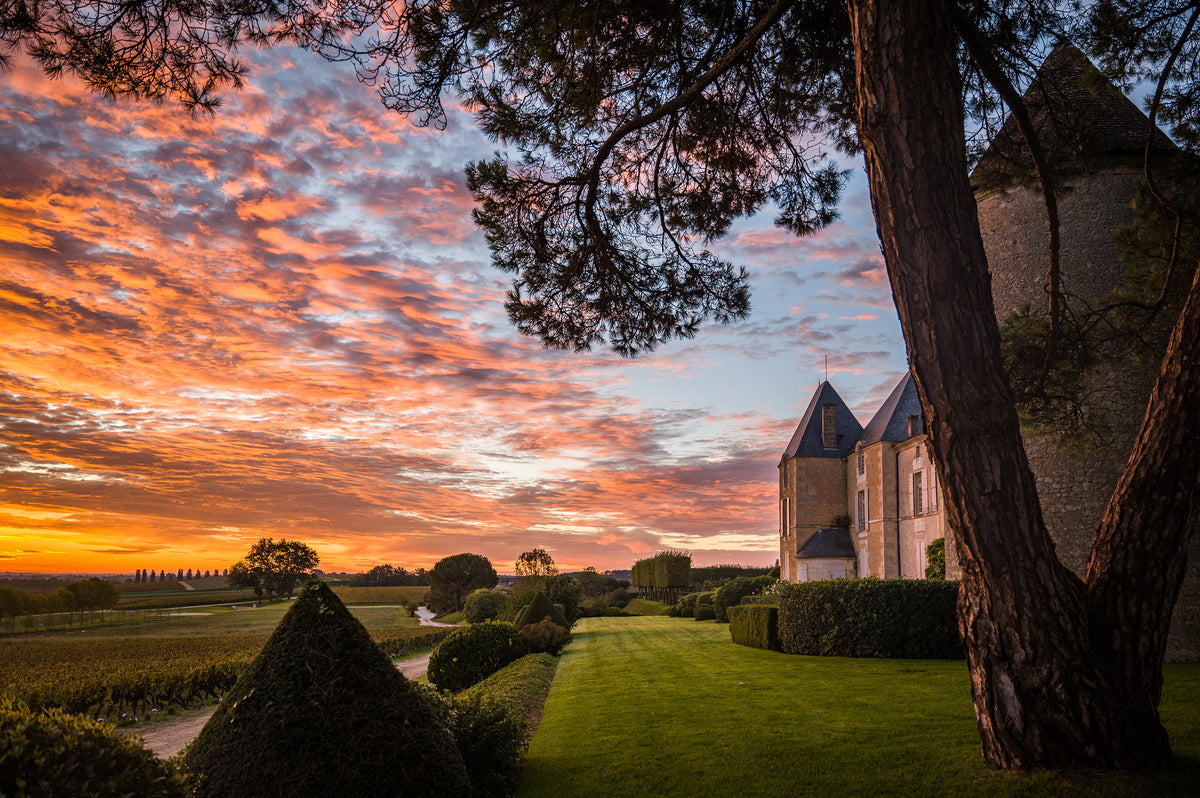
Château d’Yquem lies in the southern part of Bordeaux within the Sauternes appellation, historically part of the Graves region. The estate occupies a unique geographical position.
Its approximately 110 hectares of vineyards lie on an elevated site that rises clearly above the surrounding land. The soils consist of a complex mixture of gravel, sand, clay and limestone. This diversity provides optimal water availability for the vines and contributes to the complexity of the wines.
The microclimate is crucial. The nearby Ciron and Garonne rivers regularly create autumn mists that provide ideal conditions for the development of noble rot. At the same time, sunny afternoons help prevent undesirable forms of rot.
The vineyards are planted predominantly with Sémillon, which accounts for around 75 to 80% of the vines. The variety provides richness, texture and the ability to develop noble rot. Sauvignon Blanc complements it with freshness, acidity and aromatic tension.
The wines of Château d’Yquem
The Grand Vin Château d’Yquem is considered one of the world's greatest sweet wines and, for many wine lovers, the benchmark for noble-sweet Bordeaux.
Despite its high sugar content, Château d’Yquem always impresses with its freshness. Acidity prevents any heaviness and gives the wine remarkable balance. This combination enables exceptional ageing potential. Great vintages can mature for well over a century, developing new facets along the way.
Since 2011, the château has also produced “Y” (pronounced “ee-grek”), a dry white wine. It also comes from d’Yquem's vineyards and offers a different interpretation of the unique terroir. Today it ranks among France's most sought-after dry white wines.
Enjoy a curated selection of wines from different regions


Your personal wine contact – individual and regional
Whether rare vintages, large-format bottles, or individual storage solutions – our expert team takes the time to understand your wishes. Personally, by phone, or by email.
